Life

hello August

august3

The month of figs and warm sunsets and bats and starry evenings and fireflies and thunderstorms and peaches and obscene amounts of sweat and virgos and blueberries and the smell of cut grass and leos and cow walks and morning hikes and sunflowers and palo verde beetles and double rainbows and birthdays and squeezing every last drop out of summer.

Chronicles of Ghadid Trilogy, The Impossible Contract (Book 2), Writing, Writing Tips

On Wordcounts and Madness

You know those little aha! moments when a problem you’ve been struggling with suddenly becomes clear? And then you can’t understand why it was such a problem originally?

I received a passing comment on my writing while I was querying TIC that at first frustrated me. I’d mentioned my word count to another writing friend – 130k – and she’d responded with concern.

Isn’t that a bit… high?

What? No – if anything it could be longer. But her comment wiggled in my mind, refusing to leave. I had done my due-diligence and researched word count ranges… once or twice. Back in the day. I recalled that 130k was acceptable. Just look that those fantasy tomes bricking the shelves. Besides, my novel couldn’t be too long. My writing style was to add layers and layers upon the thin skeleton of a first draft – rewriting, tweaking, fleshing out, never concerned about too much.

I googled what the acceptable ranges were not so much to prove her wrong, but to make myself feel better (never a good sign). The results were consistent: again and again and again, 120k was quoted at the limit, and 130k was right out.

There are exceptions, of course. Life wouldn’t be interesting without exceptions. Did I consider TIC an exception? …for a while, yes. (Palm, meet forehead.)

Then another passing comment popped my bubble. My writing was overburdened, said the email. I failed to parse this, handed my first ten pages to my wife, and said: can you show me how this is overburdened?

And my wife, with her phd and her years of tight, frivolous scientific writing honed by the unmerciful hand of her PI, easily removed 200 words. When I reread those pages, nothing was missing. I understood.

We writers get caught up in our words and our worlds. We can see the room our MC is standing in and we’re convinced that the reader must also see it as we do – down to the color of the curtains. Fantasy writers especially are prone to over description. But are those curtains important? Unless the MC’s planning to rip them off the rod and make a dress out of them, no.

I had a moment of complete and absolute DUH. And then I got to work.

Everywhere I saw a word or a phrase or a sentence that wasn’t absolutely necessary. It might help set the mood – but so did the sentence before it. Or it might explain more about the world – but was that necessary to the plot? I asked each word if it served the story and if it didn’t – chop, chop.

From cutting mostly words and phrases (and rephrasing so it’s tighter), I’m down 7k. I didn’t think it would be possible. Now, it’s a game. How much can I cut on this page?

5k words to go!

Draft Zero, Writing

Quiet. Too Quiet.

I’ve been much quieter these past few weeks for a number of reasons, the first and foremost being that our lives have been completely turned upside down. But in a good way! It’s just made for some chaotic and non-writing times.

And they’re not going to be over any time in the immediate future. I made the analogy to a friend the other day that it feels like we have just thrown all of our cards into the air and we’re waiting for them to come down. Well, amazingly, two just did. I hope that I can talk about one (or both!) very soon, but it’s not quite time yet. Suffice to say, one involves my wife’s dreams, and the other involves mine.

In the meantime, I have 30k left on this draft zero and 10k+ to cut from the final draft of my other book, so I have plenty to keep me busy and distracted until we know more!!


Life

Everything is (finally) so Gay

SarahAmy018

And it’s kind of amazing.

I went for a hike yesterday morning, so I was away for many hours of the initial celebration. A friend texted me when they released the decision, so I wasn’t completely taken by surprise when I returned to the internet where everything, literally everything, was covered in rainbows.

My wife and I married in 2012 without any of the legal bits. If you’d asked me then to make a gander as to when I thought marriage would be opened up to everyone, regardless of sex, I would have said seven years, five if we were being super optimistic. But only a year later, it was legalized in Minnesota, the state we wed (and again, legally). Last year, in Arizona, the state we live. And now, everywhere. A round of applause for 2015, guys.

I still wonder if we should have waited. But then I remind myself that that’s nonsense: we couldn’t have known then. As I told Dr Lady and my family, it’s not fair to ask us to plan our lives around the whims of the majority and the courts. Now here we are, married for three years, legal for one in our own state, and now legal everywhere.

This means a lot for us, for everyone. It means we don’t have to narrow our job search to just certain states. It means when we have a kid, we won’t have to jump through more and more legal hoops in case we move. It means we can travel with that kid wherever, and not have to worry about hospitals or other stupid things. It means the United States is finally catching up to the world in at least one small, but still important, way.

It also means we’re not done. Not by a long shot. Homeless LGBTQ youth still need protection. Heck, LGBTQ youth in general are still vulnerable in many places. Transphobia is still very alive and very deadly. Racism is still imbedded in our system and culture and LGBTQ of color have their own problems that we need to address.

This is all beautiful and wonderful and the show of support from every corner has been heartwarming. Over the past fifteen, ten, five years I’ve watched so many friends and family come to accept that being gay is just another way of experiencing life. But in the back of my mind, I can already hear people brushing their hands of our issues, of related issues, and saying we’re done here. I sincerely hope that’s not the case.

For this weekend, anyway, I will choose to believe it’s not and bask in the rainbow-hued love.

Writing

Camp NaNoWriMo or How I (Re)Learned to Love NaNo

I first hopped onto the National Novel Writing Month (NaNoWriMo) bandwagon over ten years ago, during my final year of high school. It was a wild experience that taught me both the perils and benefits of writing so much, so quickly. I loved it so much that I did it again a year later in college, and again and again until I finally failed while foolishly trying to do both NaNo and write my thesis at the same time.

After graduating, I only did NaNo a handful more times before I had a falling out. I thought – erroneously – that I was above and beyond NaNo. In a way, I was – I was already writing every day, even if it wasn’t in great 2k+ bursts. I focused on rewriting and editing what I already had and steered further away from the NaNo community. I even got into a little bit of NaNo bashing, back when that was in vogue. NaNo encouraged shitty writing! NaNo wasn’t conducive to editing and rewriting! NaNo was a celebration of amateurism!

I’ve since moved on from such sentiments, realizing – in part – that NaNo never aspired to be anything more than writing and writing quickly. Some people can actually write a decent book in a month. Some people can’t. All NaNo cares about is that you try. At the end, you’ll have 30+ days of effort, a greater appreciation of authors, and either a will to keep going or an understanding that writing isn’t your thing. And that’s more than enough.

But there’s something else NaNo teaches writers that I think frequently gets glossed over or outright ignored because it’s not sexy or exciting enough: the beauty of a word graph.

Just. Take a moment. Picture a graph. Picture your projected final wordcount on the y-axis. Picture time in days on the x-axis. Imagine putting in your word count at the end of each day and watching the bars or the line slowly rise. Now, picture missing a day. You don’t want to, do you? Picture missing two days – oh god, that’s awful. Look at that sad line. All you want to do is write 50 or 100 words just to make that line move towards it’s goal. So you do. And it does. And you write a little more.

Word graphs are simple but powerful tools. They’re like that little story Seinfeld would tell about his own writing process, where he buys a blank calendar and makes a big red X on every day that he writes. Soon, it’s impossible to break that long streak of X’s. I propose that word graphs are better, because it’s a reward for writing, not a punishment for not writing.

I’ve come back to NaNo in recent years just for that word graph. I made my own, of course, using an excel sheet, but – while it helped me tremendously to stay on track – it lacked that sparkle of magic.

Unfortunately, NaNo right now lines up with my editing and rewriting months. But there’s this thing called Camp NaNoWriMo that’s smaller and takes place in July. Even though there are far less participants, you still have that camaraderie, that social push to write, and – yes – that beautiful graph.

Anybody else going to participate in Camp NaNo this year?


Chronicles of Ghadid Trilogy, The Impossible Contract (Book 2), Writing

What’s to Come

Ever since committing whole-heartedly to being a writer, I’ve taken the time every six months or so to sit down and plan out what I’m going to do next. This keeps me committed, keeps me on schedule, helps me practice hitting deadlines, and reminds me that new projects should always be just around the corner.

As we head into June, I find myself at one of those junctures. It is time – again – to plan out the next few months and to shape where I would like to go. Now that The Impossible Contract is – mostly – done and I have to wait for my second round of queries to go through, I need something else to focus on.

Unfortunately, at least for June, I can’t stray too far. I still have to wait for beta feedback and be ready to make a few last minute edits. When it comes to writing, I’ve tried multitasking on multiple projects and it just doesn’t work.

My solution is actually pretty simple: I won’t stray far. Instead, I’ll play with this short story that has to do with some events that happen off screen in the middle of the book. It’ll be fun and it’ll keep me writing and it shouldn’t be longer than 15k – perfect for a month.

But after that…

Well, July brings Camp NaNoWriMo, which is ideal timing for the start of a new WIP. 30 days and 50k words should give me a pretty good idea of whether or not this next story is workable. Considering I don’t think this story will be longer than 80k – it’s YA, after all – a 50k word draft zero is ideal. I’ve learned that I frequently have to add a lot more to my first draft, which seems to be the opposite of most writers’ processes.

In August, I’ll cool down with some edits and/or research. For TIC, I did draft zero in one big, two month & 80k burst, then I took a month and shored up the research I’d begun while writing. I can see myself doing something similar, even though this new WIP (OIBM) shouldn’t need as much research.

Then September  onwards – rewrite rewrite rewrite. Depending on where I am in the rest of my life (my job might be changing, we might be moving, there might be some other big changes), I’ll set mini goals for those months. I’m not even going to try to set them now, though, since life is quite volatile at the moment.

Ideally, I’ll be done with the first major rewrite by December. If I follow remotely the same trajectory as TIC, then January-February will be the last of my edits before I round up some betas.

But that’s more than six months out, so I’ll reevaluate at that point. As much as I love TIC, I’m really looking forward to starting a new project.

Chronicles of Ghadid Trilogy, The Impossible Contract (Book 2)

On Wearing Black in the Desert

One of my beta readers recently asked about the black tents one of the cultures in The Impossible Contract use in the middle of a Sahara-like desert. The question reminded me about the wholly counterintuitive use of black fabric in extreme heat and how, paradoxically, black fabric is actually superior to white in a handful of small, but incredibly important, ways.

Yes, the color black absorbs more heat than white, and white reflects more heat than black. But according to a study done in 1980, Why Do Bedouins Wear Black Robes in Hot Deserts?, there is a lot more going on than that. One very brave volunteer donned both a full white robe and an equivalent black one and stood for 30 minutes facing the sun at midday in the desert. The temperature ranged from a moderate 95F to a more intense 115F. Talk about dedication!

The results were surprising: according to the article, “the amount of heat gained by a Bedouin exposed to the hot desert is the same whether he wears a black or a white robe. The additional heat absorbed by the black robe was lost before it reached the skin.”

But why is that? Another scientific study done prior to the let’s-make-an-undergrad-stand-for-an-extended-period-of-time-in-the-desert experiment measured how various colors and types of bird plumage released or trapped heat. In 1978, Walsberg, Campbell, & King examined what happened when black or white plumage was fluffed up or flattened down when introduced to heat. To make their study even more interesting, they also varied the wind speed.

What they found was that while fluffed, white plumage let the most heat escape when there was no wind, when there was any sort of modest wind, black fluffed plumage fared much better.

The reason for this somewhat surprising discovery is actually at the beginning of this post: white reflects heat the best. That means from the sun, yes, but also from your own body. So all that heat you’re putting off just gets reflected back at you when you wear white. Black absorbs the heat from both the sun and your body, and as long as the fabric is loose enough for wind to get through, that heat radiates outwards instead of inwards and gets swept away.

Convection only sweetens the deal: in drawing heat away from the body, black fabric encourages more air flow. This works equally well for tents. The black then absorbs any heat from the bodies beneath it while creating a nice, gentle breeze. Ideally.

While you might not notice a difference in most of the United States, maybe next time you take a sojourn through the Sahara or Death Valley, you should try wearing black.

Querying, Writing Tips

#Pitmad Coming Up on June 4th!

Although I have been around the internet since modems made that awful dialing noise while they connected – or rather, tried to connect – and I have been on Facebook and Livejournal and now WordPress since forever, I have had a hard time with Twitter. It’s such a fleeting, ephemeral platform, where there is no past and everything must be condensed into a 140 character soundbite.

Not for want of trying, of course. But my relationship with Twitter has been like a reverse Brokeback Mountain – I can’t stop quitting you. Now that I have a Smart Phone, though, it’s become a tad bit easier. It still seems like the shallowest of the social media forms, but maybe that’s to be embraced instead of rejected.

Plus, there are a ton of writer resources on Twitter that just can’t be found elsewhere. Agents posting their wishlists (#MSWL). Genre-related chats. Industry-related topics (#publishing). Writerly camaraderie and community (#amwriting).

But the resources I am currently the most excited about are the contests. Specifically, the pitch contests. More specifically, #PitMad.

If you are like me and have had your head under a rock for the past few years, then you should know that #PitMad is a quarterly pitch contest on Twitter wherein writers tweet their appropriately-tagged novel pitches into the ether and real live agents read and sort and favorite them. It’s one way to get ahead of the slush pile and/or seize the attention of agents not currently open to unsolicited queries.

The next #PitMad event is just next week: June 4, 2015. That is more than enough time to come up with two-three different pitches, each perfect in their own way and yet also able to build on each other.

So if you’re a writer with a completed and ready-to-query manuscript – come join me in this pitch event! You can follow me on Twitter @KA_Doore.

Book Reviews, Chronicles of Ghadid Trilogy, Writing

Research

In gearing up for my next project, I’ve been brainstorming what I’m going to research, how I’m going to research it, and in what format I want to share that research here. Because it’s going to be all magical girls, all the time, it’ll be a lot of fun – I’m planning to binge watch most of the classic anime series and I’ve been scouring the online world for anything with hints of magical girlness in the book world. From what I’ve seen – so far at least – there isn’t much.

Granted, this could mean that there simply is no market, but I’m willing to bet my time (and possibly sanity) that that is not, in fact, the case.

But as I mused over these things, I realized I’d never shared any of my preliminary research for my current, actually done, novel here. Partially because I was so involved with the process at the time, but also partially because I didn’t think anyone would actually be interested.

Then I thought – I was interested. Surely there might be other people, too.

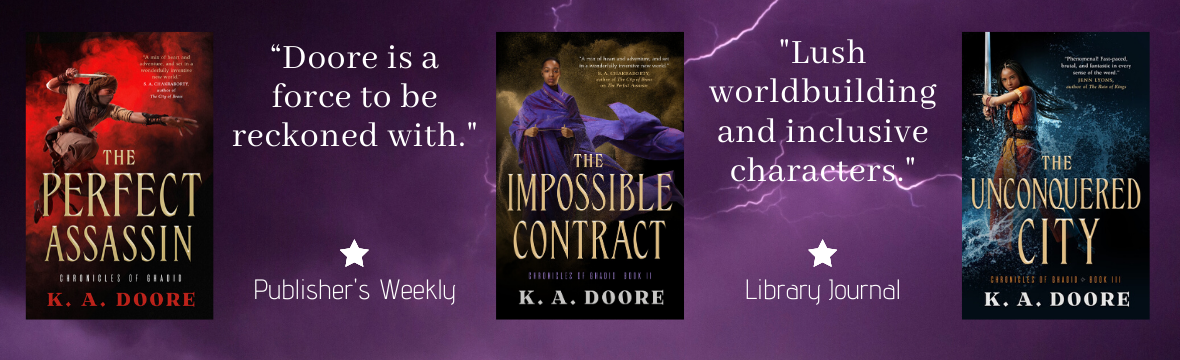
So I’m going to do a short little series delving into the background of my current novel, The Impossible Contract, the research, and what all came together to make it more than just a tromp through some sandy places.

When the idea for this story first popped into my head, I knew it was going to be set in a desert much like our modern day Sahara. Although I currently live in a bona fide desert, it doesn’t quite have the range of extremes that the Sahara does. That’s when I knew I’d need to read some first hand accounts of what it’s like not only surviving, but thriving, in that kind of environment.

Little did I know the size of the rabbit hole I was about to fall into.

The Sahara and its people and disparate cultures are absolutely fascinating subjects. It is the endless dunes that come to mind when you merely think the word, and it is rocks and wind and mountains and oases, wells and flies and camels and deep underground aquifers, gods and demons and unnamable madness.

But it’s also, you know, everyday people living their lives.

I read more than a dozen books on the Sahara alone, but to start you off, I’d recommend these in particular:


Men of Salt by Michael Benanav
This is a first-hand account of travel with a salt caravan from a western perspective. It’s absolutely fascinating and a great way to introduce yourself to the region, if you don’t previously have any knowledge or experience. Since it’s an outsider’s perspective – and a tourist’s at that – it doesn’t get into the nitty gritty of cultural details and makes some assumptions, but it’s a quick, fun read and I found with follow-up research that most of it was spot on.


Skeletons on the Zahara by Dean King

Also an absolutely fascinating account of shipwrecked Americans adrift in the Sahara. This novel is based on a true story in the early 19th century and was especially interesting to read right after Men of Salt, because so little has changed. While the story suffers from both an overabundance of minutiae and the problematic outsider viewpoint, it shows a lot more of the everyday culture and just what it takes to survive in the Sahara.


Sahara: A Natural History by Marq de Villiers & Sheila Hirtle

This book. This book. If you want an overview of the Sahara – its history, its cultures, its geography – then you should read this. This book made me absolutely fall in love with the Sahara. It made me wish I’d majored in something other than Classics. It’s certainly not perfect, but I think it accomplished what it set out to do, which is to really make you understand just how complex the Sahara is. And how recent! The great, empty expanse of sand as we know it is only a few thousand years old – the ancient Egyptians certainly experienced it much differently than we do now.

Altogether, it was more than enough to make me wonder why there aren’t more stories set in deserts. And then I might have gone on a reading binge of what novels I could find that met that criteria. But that comes later.
Querying, Writing

Stasis

I.E.: the brief reprieve that comes between large projects.

It’s an interesting time when you’ve just finished one big project, but you can’t quite start the next one. Part of this is because I’ve come to learn that when I need to query, I can’t be focused on another story. I’ve tried that before and I always end up working on that new and shiny story instead of putting my energy into querying.

Querying takes a surprising amount of time. You’d think you could just write up your generic query letter, maybe a full on synopsis, and send that out to any agent you find interesting – and that’s what I did when I first started querying, way back in the day. But I’ve learned that that method is: a) a waste of your time, and b) a waste of their time. As someone who has seen the sheer volume of queries that arrive in an agent’s mailbox on a daily basis, the last thing I want to do is waste their time with fantasy when all they rep is sci-fi.

You have to research the agents, look at their clients, their web presence, and everything else to see if they’re a good fit. Sometimes this is easy, especially when they’re explicit about what they want on their bios. Sometimes, it’s not so easy, and you can lose an hour (or two [or three]) simply trying to figure out if an agent is a good fit. Then there’s crafting the query itself – yes, you can use a catch-all query letter and hope for the best, or you can tailor them to the specific agent. And again – having seen what fills up an agent’s mailbox, sometimes just taking that extra time to not only follow the submission requirements, but also make it obvious you’ve actually looked at that agent and know who they are, can make a reeeaally big difference.

That’s all to say: querying takes a lot of time. It takes focus and research and effort. The same exact things a new novel would demand. With a fulltime job, I simply cannot do both simultaneously. I’m not complaining – I can pay my bills! – but it does leave me in a liminal state, teetering between projects.

I want to move forward, start research on the next one, but I also want to give this one the time and energy it deserves. I feel like I’m just on the edge, so very ready to take the next step. Nobody likes querying, nobody likes waiting, but it’s still necessary.

In the meantime, during all those moments where I would usually squeeze in some writing, I’d better get back to reading. I am woefully behind.